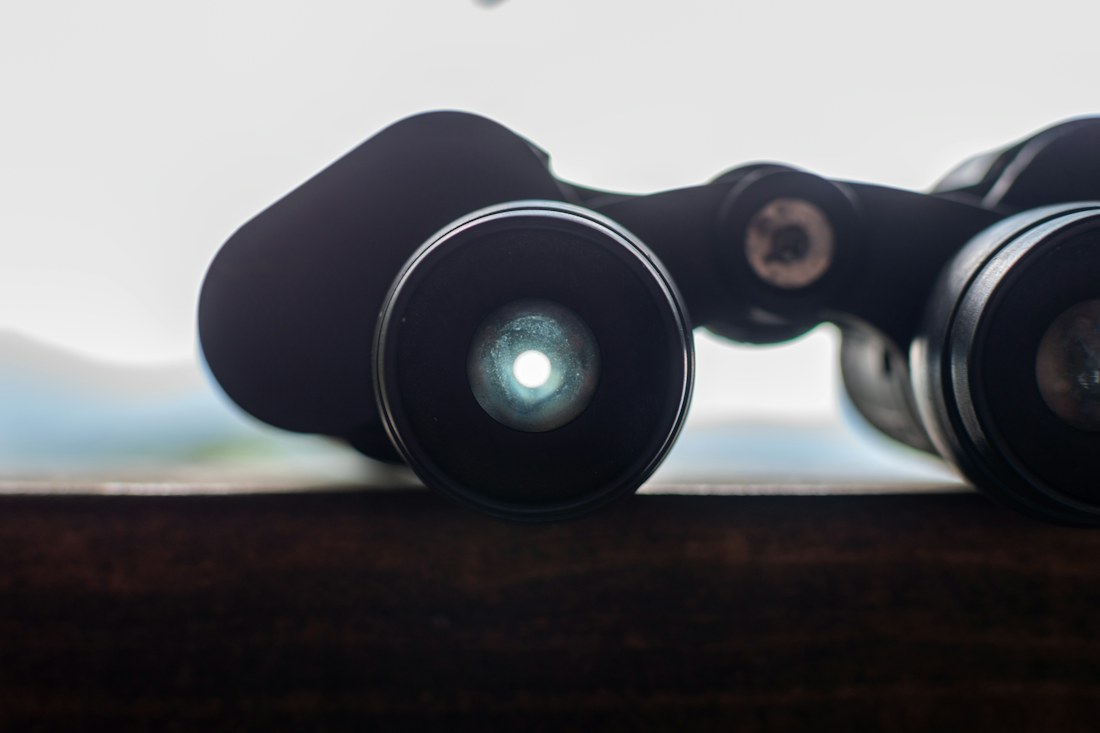
Start with a clear view through both barrels
Follow the binocular’s manual to set the hinge width and eyecups. Aim for a single comfortable view rather than pressing your eyes into the cups. Wear the glasses you normally use outdoors, because the usable eye relief matters more than a spec you cannot comfortably use.
Set the diopter according to the manual
Use the maker’s focus and diopter procedure, then mark or remember your setting if the design permits. Do not compare two binoculars while one is adjusted for somebody else’s eyes. Check that any locking adjustment is engaged before packing them.
Compare the same subject
Look at the same stationary subject from the same position. Notice whether you can find and follow it comfortably, read detail near the center, and keep a stable view. Avoid turning a quick indoor glance into a claim about low-light or long-term field performance.
Check the whole carrying system
Try the strap or harness with the jacket and pack you intend to use. Confirm that the binocular can be removed and returned without fighting a buckle. Weight on a specification sheet does not tell you how the complete system sits on your chest.
Record fit separately from specifications
Note eye comfort, control access, and harness compatibility as personal observations. Keep manufacturer measurements in a different column. That distinction lets you explain why a model fits you without presenting a preference as an objective optical score.