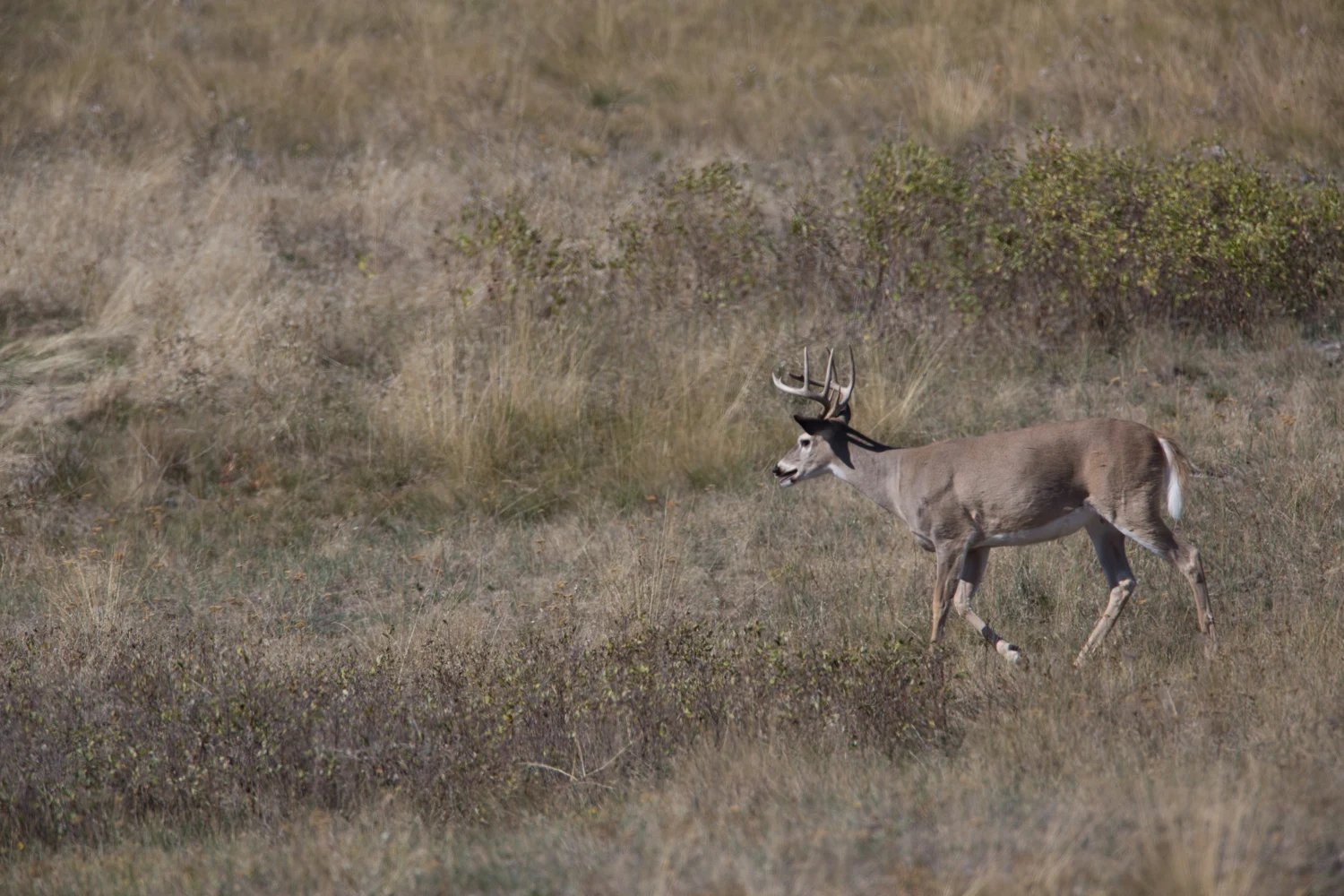
From the first scrape to the quieter days after the chase. Learn what changes, find historical timing for your state, and build a better local picture.
Choose your state, then a region where available. These are historical biological references, not live rut reports or hunting season dates. Hunting in Tennessee? See this season’s deer dates and bag limits →
Reviewed October 29, 2026. Timing profiles for 36 states. All 50 states are selectable, with evidence gaps clearly identified.
LOCAL HERDS. LOCAL TIMING.
There is no national rut date.
Pennsylvania’s historical adult conception medians fall in November. South Texas study-area peaks fall in December. Some Gulf Coast populations peak later still.
Select your state to see what the research supports and where local information matters most.
Know what a date measures. A conception peak, a GPS movement peak and a broad breeding season answer different questions. Every result labels its evidence.
THE SEASON IS A STORY
Five phases. Plenty of overlap.
These are useful descriptions of behavior. Individual deer do not move through them on one exact schedule.
Before the local main breeding period
The woods start leaving clues.
Bucks move out of summer patterns. Rubs, scrapes and scent communication become more noticeable as breeding approaches. A scrape records a visit, not a guaranteed daylight appointment.
In the field Look for fresh sign and repeat observations. Record when and where you actually see deer rather than judging the entire herd from one photograph.
As more does approach estrus
When the trail comes alive.
Bucks search for receptive does and may follow or chase them. Travel can become less predictable. The activity a hunter sees is related to breeding, but it is not a direct measurement of conception.
In the field Watch the does and the routes connecting their cover. Compare several days of activity, daylight and pressure before calling a local peak.
When the most does are receptive
The peak can look quiet.
A buck can stay close to a receptive doe instead of covering the same visible trails. That helps explain why a quiet camera or sit can happen during the main breeding period. Different animals overlap these behaviors.
In the field Keep the distinction between movement and breeding in mind. A quiet afternoon is not enough to conclude the rut has ended.
As local main breeding tapers
A different pace. A different focus.
Food, rest and secure cover matter as deer recover. Bucks can still respond to a receptive doe. Recovery is a gradual change in the herd, not a switch that flips on a national date.
In the field Pay attention to natural food, cover, access and disturbance. Keep observations from the recovery period separate from notes made during heavy chasing.
About one cycle after a doe’s first estrus
A smaller window can still matter.
Some does that did not conceive may return to estrus roughly 28 days later. Some young does enter their first breeding cycle later too. A “second rut” is not a guaranteed replay of the main rut.
In the field Start with local breeding information. A second-rut estimate cannot be obtained reliably by adding 28 days to a road-collision or general movement peak.
Much of the northern whitetail range has a concentrated fall breeding period. Farther south, local herd history and conditions create substantial differences across short distances.
Shortening daylight is a central driver of breeding timing. Weather can influence the activity you see, but a cold front does not create a new conception calendar for the whole herd. MassWildlife explanation ↗
Is the second rut always in December?
No. The roughly 28-day interval refers to a doe returning to estrus after an unsuccessful first cycle. The starting point is local. Southern populations with winter main breeding can have later follow-up activity. Some young does also breed for the first time later in the season. TPWD research ↗
Why did the deer seem to disappear at peak rut?
Visible chasing and actual breeding are different observations. A buck tending a receptive doe can spend less time on the trail your camera covers. Pressure, food and your observation coverage also matter. Mississippi DWFP explanation ↗
Are these dates hunting season dates?
No. This guide describes biological timing. Follow your state agency and the land manager for current seasons, local access, licenses and requirements. A biological window can fall outside an open hunting season.
Does this cover mule deer, blacktails or elk?
This guide focuses on white-tailed deer. General agency accounts are labeled where they discuss deer broadly. Do not apply a whitetail date to another species, or to a different population without supporting information.
FOLLOW THE EVIDENCE
Clear sources. Honest estimates.
Dates are summarized from wildlife agencies and university resources, reviewed October 29, 2026. Historical studies describe their study areas and periods. We retain their scale and distinguish conception data, rut activity, movement proxies and broad seasonal descriptions.
We do not add fixed pre-rut or post-rut days to every date. Secondary breeding is described as a biological possibility, not a separately measured peak unless a source establishes one. The lookup does not use weather, moon phase or your location to invent a current forecast.
Alabama
local populationsHistorical map bands span November 10 to February 8; much of the state peaks mid to late JanuaryBreeding · Map bands: November 10 to 23, November 24 to December 8, December 9 to 24, December 25 to January 8, January 9 to 24, January 25 to February 8.Alabama Wildlife & Freshwater Fisheries ↗
Arkansas
western countiesOctober 28 to November 21Breeding · Range of county conception peaks; not one 25-day peak on every property.Arkansas Game & Fish Commission ↗
eastern countiesNovember 22 to December 14Breeding · Mississippi River counties tend later in this historical agency account.Arkansas Game & Fish Commission ↗
local deer management unitsFrom July in southern Florida to February in northwest FloridaBreeding · A November-only message would be wrong for much of Florida. The January/February content focuses on late northwest populations.Florida Fish & Wildlife Conservation Commission ↗
Georgia
county movement mapExamples: Cobb November 3 to 9; Fulton November 10 to 16; Seminole December 22 to 28Movement proxy · These are mapped movement windows. Do not label them as exact conception dates.Georgia DNR / University of Georgia ↗
Idaho
State overviewNovemberBroad season · This general account covers deer and does not isolate whitetail conception peaks from mule deer.Idaho Fish & Game ↗
State overviewPrimarily October and NovemberBroad season · No exact peak week is claimed in this account.Indiana DNR ↗
Iowa
State overviewAround the first week of NovemberMovement proxy · Movement peak is not identical to peak conception.Iowa DNR ↗
Kansas
State overviewMid NovemberRut activity · Older statewide context; no county-specific conception date is claimed.Kansas Wildlife & Parks ↗
Kentucky
State overviewMid NovemberRut activity · This is historical biological context. The old release is not the current season schedule.Kentucky Fish & Wildlife ↗
Louisiana
local populationsLocal average two-week peak windows shown on LDWF’s mapLocal map required · The available agency text does not justify a single statewide month or exact date. Use the parish/location map before making a local date claim.Louisiana Department of Wildlife & Fisheries ↗
Maine
State overviewMid November; assessment identifies the third weekBreeding · Younger does can breed later, including December and January.Maine Inland Fisheries & Wildlife ↗
Maryland
State overviewFirst half of NovemberBreeding · Overall breeding extends from mid October into mid December.Maryland DNR ↗
Massachusetts
State overviewNovember 6 to 20Breeding · The agency separates pre-rut, main rut and recovery. Weather changes what you see more readily than the breeding calendar.MassWildlife ↗
Michigan
State overviewOctober to November breeding seasonBroad season · This is the overall breeding season. It does not establish a precise peak conception week.Michigan DNR ↗
Minnesota
State overviewNovember breeding; rut behavior increases in late OctoberBreeding · The source supports a month, not an exact statewide peak week.Minnesota DNR ↗
Mississippi
northwest to southeastSome northwest populations as early as late November; some southeast populations about mid FebruaryBreeding · A local mean conception map is available. An early northern Mississippi window is not a coastal Mississippi date.Mississippi DWFP ↗
Missouri
State overviewFirst 10 days of November in this hunting accountRut activity · An agency hunting account, not a statewide conception dataset; rut behavior continues outside these days.Missouri Department of Conservation ↗
Montana
MontanaThroughout NovemberBreeding · Source supports a month, not an exact statewide peak week. This row does not apply to mule deer or elk.Montana Fish, Wildlife & Parks ↗
New Hampshire
State overviewSecond or third week of NovemberBreeding · A week-scale agency description rather than a county model.New Hampshire Fish & Game ↗
New Jersey
New JerseyNorthern adults: November 3 to 23; southern adults: November 10 to 20Breeding · Agency fetal data also show later fawn breeding. County and age class matter.New Jersey Fish & Wildlife ↗
New York
State overviewMid NovemberRut activity · The full breeding season spans October to January; the source does not supply a narrower statewide conception interval.New York DEC ↗
North Carolina
State overviewCounty estimates span late October through early DecemberLocal map required · Use the linked 2025 map for your county. Small samples have lower precision; a single average date is not the whole breeding season.North Carolina Wildlife Resources Commission ↗
State overviewEarly to mid NovemberBreeding · The overall season can extend from mid October into mid January.Ohio Division of Wildlife ↗
Pennsylvania
PennsylvaniaNovember 11 to 17Breeding · Adult median conception window. Later doe fawn breeding also occurs.Pennsylvania Game Commission ↗
Rhode Island
State overviewFirst two weeks of NovemberBreeding · An agency overview, not a promise of increased daylight activity on every property.Rhode Island DEM ↗
South Carolina
South CarolinaEarly to mid NovemberBreeding · The entire breeding season extends beyond the peak.South Carolina DNR ↗
South Dakota
State overviewNovemberRut activity · The source supports the month only. Consult current rules separately; historical access details may change.South Dakota Game, Fish & Parks ↗
Gulf Prairies & MarshesNorthern study area September 30; southern study area October 31Breeding · Separate northern and southern study-area peak dates from the historical TPWD study.Texas Parks & Wildlife ↗
Post Oak & Cross TimbersPost Oak November 10 and 11; Cross Timbers November 15 and 17Breeding · Four historical study-area peaks summarized here; not a single continuous statewide peak.Texas Parks & Wildlife ↗
Rolling PlainsSouthern study area November 20; northern study area December 3Breeding · Separate local study-area peak dates.Texas Parks & Wildlife ↗
Edwards PlateauEast November 7; central November 24; west December 5Breeding · Three distinct study areas, each with its own peak. These dates are not one continuous peak on a single property.Texas Parks & Wildlife ↗
Trans Pecos whitetailsDecember 8Breeding · Whitetail study result, not a mule deer rut date.Texas Parks & Wildlife ↗
South Texas PlainsEastern study area December 16; western study area December 24Breeding · Separate eastern and western study-area averages. These are historical anchors, not precise annual predictions.Texas Parks & Wildlife ↗
Virginia
State overviewLast two weeks of November in the species accountBreeding · This statewide account is broad. Local DWR-hosted field accounts also describe earlier November breeding. Use observations from your herd rather than treating either as an exact date.Virginia DWR ↗
Washington
State overviewColumbian whitetails: first to second week of NovemberLocal population · Applies to the lower Columbia population. These deer have special protections; this is wildlife biology, not a statement of hunting eligibility.Washington Fish & Wildlife ↗
West Virginia
State overviewNovember rut; late October pre-rutRut activity · No narrower conception interval is established here.West Virginia DNR ↗
Wisconsin
State overviewOctober 23 to November 12 in the southwest study areaRut activity · This is a local movement study, not a statewide fetal-conception window.Wisconsin DNR ↗
Get the checklist and join DYLIO for outdoor guides and printable updates. Confirm by email. Unsubscribe anytime. Privacy policy
Your privacy choices.
Choose how DYLIO uses optional cookies. Analytics helps us improve the site. Advertising tracking shares website activity with Meta to measure Facebook and Instagram ads. You can change this anytime.